I write —in pencil—mostly nonsense.
“Luke Beesley’s In the Photograph offers a series of vignettes that capture the poetic imagination in flight. In these prose poems, capacious and playful, the subtle ‘twists in emotional grammar’ inconspicuously ‘concertinaed’ in the seconds of our diurnal existences billow out into surreal and hypervivid epiphanies. Shuttling between the suburban and the sublime, Beesley finds provocations in everything… [T]his book provides conclusive proof of the compatibility between formal experimentation and democratic appeal.”
Judges’ comments, Prime Minister’s Literary Awards
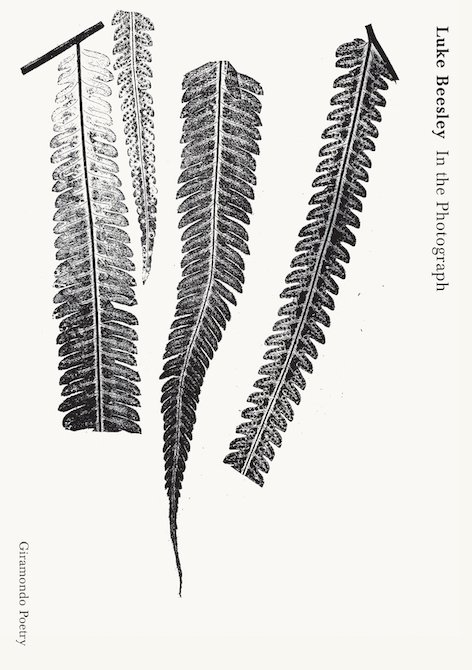
In the Photograph (2023)
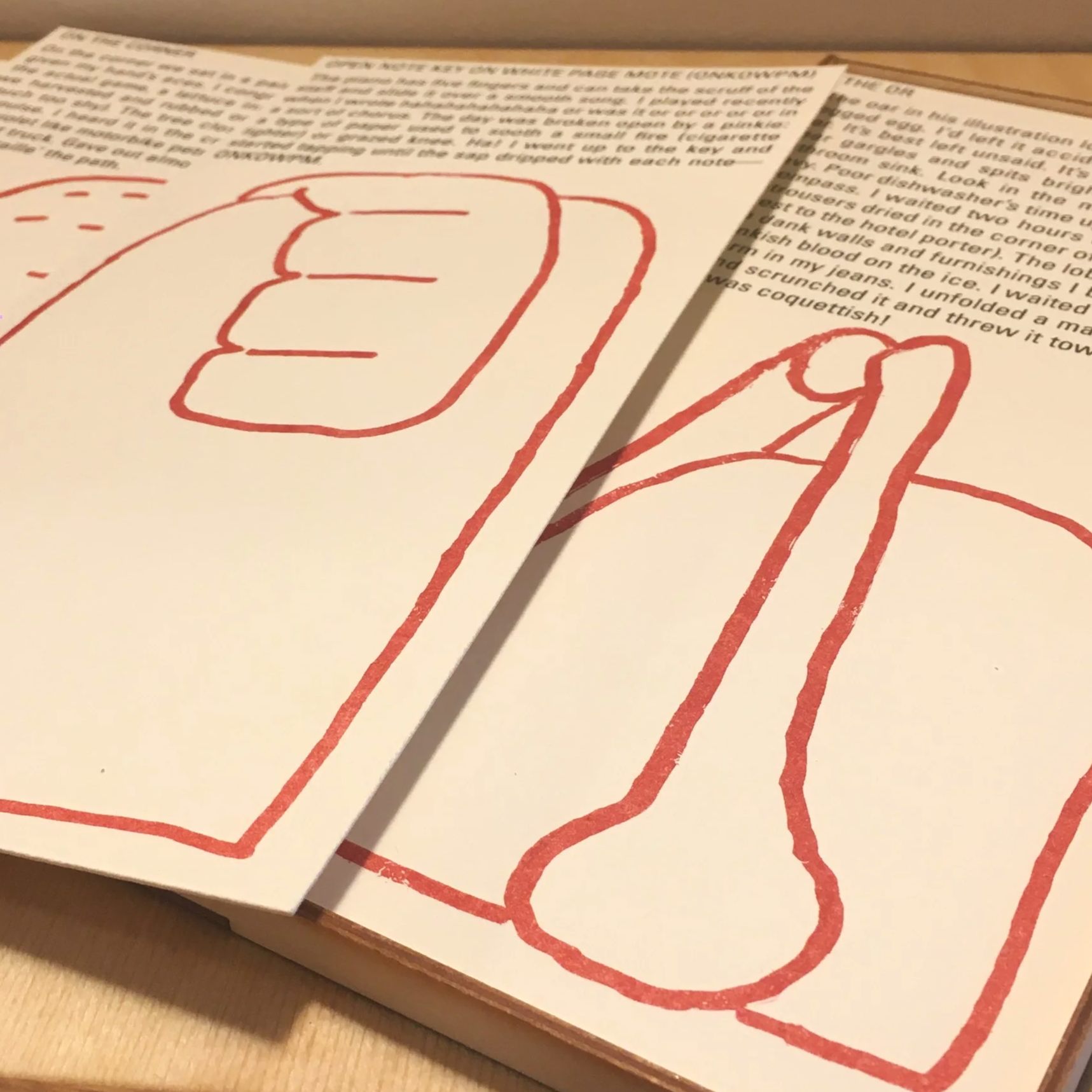
Basic Tables (2022)—limited edition artist book with Phil Day, printed by Sunshine Editions and published by Life Before Man and Gazebo Books
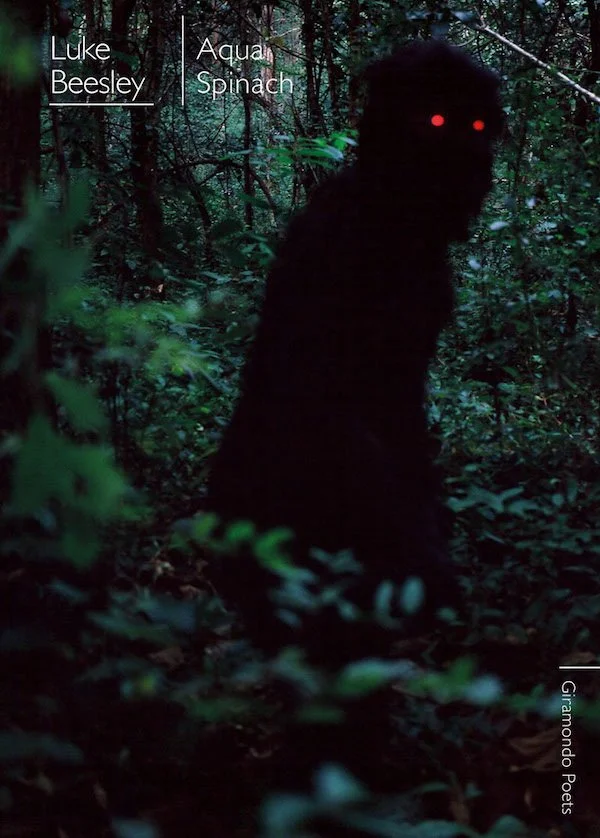
Aqua Spinach (2018)
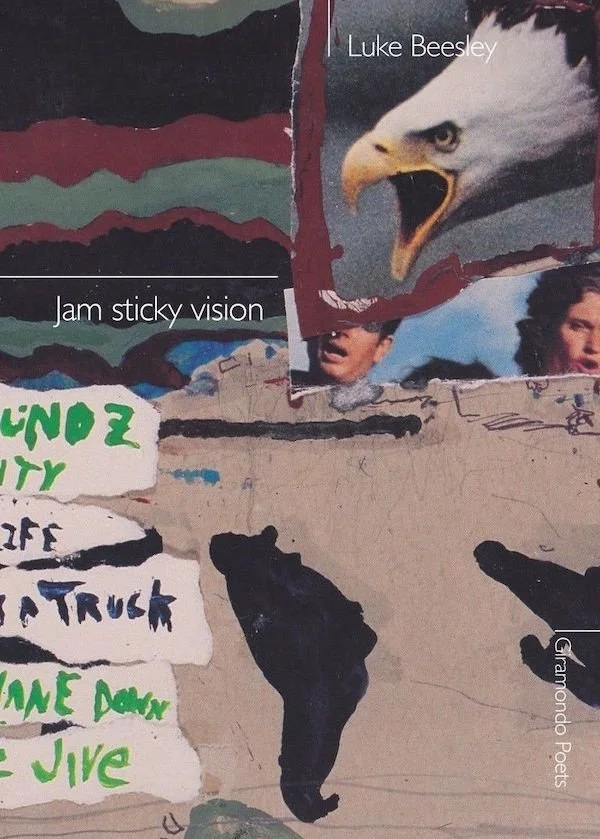
Jam Sticky Vision (2015)
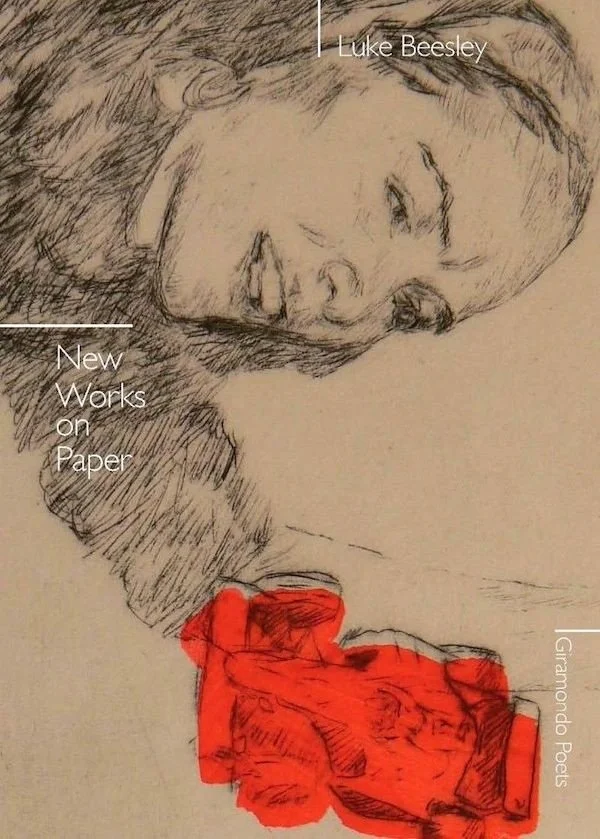
New Works on Paper (2013)
Balance (2012)
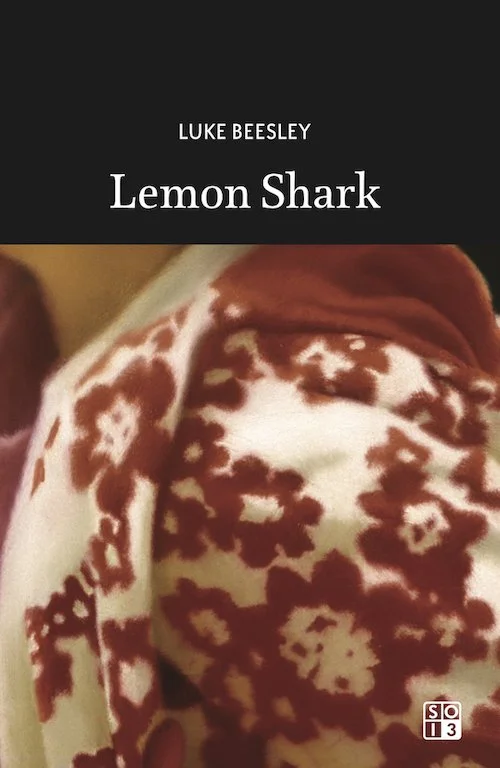
Lemon Shark (2006)
In the Photograph is continually preoccupied with the performative play of language, and with troping on life imagined as literature or art, and vice versa. Many of its allusions are to literary works – and to films, musicians, visual artists, and poets. Numerous linguistic sidesteps create a persistent sense of narrative disruption and disjuncture, including punning word associations. One of Beesley’s primary techniques is the non sequitur, ensuring that there are no reliable narratives available. Such techniques constitute an often deftly constructed quizzing of narrative’s resources.
Australian Book Review by Paul Hetherington
... full of careful consideration of the reality of suburban life in Australia, especially the quotidian life of artistically inclined suburbanite adults. The attention is intimate, the care is great. A tone of tenderness has grown more prominent in these new poems.
Cordite Poetry Review by D. Perez-McVie
The mostly prose poems in Luke Beesley’s In the Photograph play within the landscape created by the divergences between our perception and interpretation of the world and the world itself.
Best American Poetry by Thomas Moody
Memory is at times an overwhelming place of accumulation, but as I glance across the open pages, what makes this poetry so intriguing is its pétillant wit and unwavering attention to the imaginative possibilities that arise from the minutiae of our existence.
Justin Cantrell, Readings Monthly
A kind of literary seismograph of the literary mind’s dreaming mind.
What we're reading in August, Roaring Stories
Luke Beesley’s talent is to highlight everyday phenomena, like capturing your life in photographs. Where the memory and the image meld you hold a feeling of the moment rather than explicit visual details. The mysterious deserves time. Let this poetry dissolve over you and you will come away asking: was that something I dreamt or was I there?
Plumwood Mountain by Geraldine Burrowes
Aqua Spinach by Luke Beesley (Giramondo), for its synaesthetic montages / ekphrastic poems (of ink, paint, film and music), ‘always drawing on emotions caused by repetition’.
'What Our Readers, Editors and Contributors Loved in 2018', Overland
“Aqua Spinach” is broken into three sections, “Ink”, “Paint” and “Film”, writing, visual arts and cinema being the points on a three pronged surrealist compass, the sixty-four poems seeping into your awareness, leaving scar tissue memories and setting off synapses of past experiences like miniature firework displays in your brain. ... The exploration of literature, visual arts and film through small bursts of comprehension creates a hybrid questioning of absurdity in the everyday. A collection that lingers and haunts your dreams…or your reality.
Messenger's Booker by Tony Messenger
What follows is a book of restless wordplay and surreal juxtapositions. The poems are febrile with ‘sizzling colour, blurring landscape’. Like Hile, Beesley animates the restive, private associations of his distinct sensibility.
Cordite Poetry Review by Joan Flemming
A line might be a reference, a confession, and an ontological question all at once. In drawing connections between different ways of seeing, the poems are synesthetic, but this synesthesia is more than a formal experimentalism: it is a real and relatable state of mind ...
Farrago, Finbar MacDonald
The horizon becomes ‘an open window’, and by extension, and in my reckoning, the book becomes an open window too, as with each poem inside. Seemingly disparate words, sounds, images, ideas, themes, and events connect across the poems and become like the one-dimensional particles of string theory—they begin to vibrate. Poems merge and resonate with each other—we can see and travel through one to any other.
Relive Your Dreams Awake, by Toby Fitch in Sydney Review of Books
Five Australian poets to read right now ...
The Guardian by R D Wood
Beesley's words always seem to perform a double, triple or quadruple duty. Amongst such visually and syntactically scattered pieces, the reader's mind is nudged into perpetual motion around the Mobius strip of significance.
Rabbit Poetry Journal, Lucas Smith
Jam Sticky Vision still feels like a distinctly Melburnian collection – stylish, witty, erudite, contemporary, but also personal and close to what one might call home. Ultimately, the collection offers readers a visually rich spread of poetry, comprising a hyperreal blend of ekphrasis, absurdist imagery, anecdote, and autobiography, which somehow manages to be as entertaining as it is challenging and profound.
Cordite Poetry Journal by Nick Xuereb
He seems to start writing a poem and then becomes shocked, stunned, by a word he's just put down, unable to go past it, as if discovering the letters for the first time, as if the poem has somehow written him.
The Australian, Kirsten Krauth
His poetic seems to be tasking a different challenge, allowing sensuality to infiltrate in and around the words, allowing sufficient space for a reader to get busy thinking about evolving tangents and intersections for themselves. ... I was struck by the intravenous serge that many poems provided. The way certain poetry makes other poets who read it tingle.
foam:e by Louise Waller
New Works on Paper is remarkable for its surreal logic and imagery … The poems are witty and erotic in their wild energy, surprising, edgy and angular in their shifting perspectives, full of startling disjunctions and mirrorings, and always acutely aware of their own craft.
Avenue Bookstore
If poetry is a slow drink, a cocktail, this year I found Luke Beesley's New Works on Paper rinsing my frontal lobe like a well made martini. Language is made deliciously strange under the pressure of Beesley's pencil, in poems that get "caught in your / eye like a coin at the bottom of a public pool".
Books of the Year, The Australian, Jaya Savige
Beesley is a serious worker of image and syntax, brilliantly pushing at the possibilities of the quotidian, and of the sentence, which we follow with a sense that meaning is an image: a not quite linear, yet not quite escaping, butterfly. Quietly, surprisingly, poems occur. The judges found Aqua Spinach a unique and unusual work, at the forefront of what is becoming a predominant experiment of Australian literature: the writing of prose poems.
ALS Gold Medal judges (2019)
We might as well ask if our lives are titles for our dreams. Beesley's poems continually challenge normative ways of thinking about language: the two poems just mentioned end, respectively, thus: "one of the workers sleeps in a cupboard simile" and "fling a few words into the trees." The narration, rather than merely reporting thought, or representing reality, is as in the mix as Beesley can get it, bending sentences like Aphex Twin bends tunes.
The Australian, Michael Farrell
In Luke Beesley's case, contrarily, what looks like a wildly surreal accumulation of moments and wordplay pops out its extrusions of clarity like some poetic 3D printer. Ekphrasis is triumphantly reinstated, because for each iteration, while the idea of it is hard to encompass, the object is undeniably there. Beesley ranges across every kind of modern culture, from cinema (Malick, Lynch, Wenders); to music (lo-fi genius Bill Callahan); writing - Joyce, O'Hara, Tagore; and art - a lovely riff on Marcel Duchamp called 'Nude descending a Solo' ...
Australian Book Review, Peter Kenneally
In this boisterous follow-up to Melbourne artist, musician and poet Beesley’s 2013 collection New Works on Paper (mostly American) poets, painters, actors, musicians, film-makers and others mingle in a quotidian penumbra of breakfast cereal and public transport.
The West Australian by William Yeoman
One wonders what world of bridging words has been erased between what appears on the page. You can either dwell slowly on each word, as though each was a pillar, imagining what once lay in the chasms between—or you can slide along and focus only on the musicality.
Red Room Company, Emma Rose Smith
Beesley’s images are startling and surreal. They suggest how an image can be an instance of interpretation and apprehension, an object not captured, but remade...
Cordite Poetry Review by Ella O'Keefe
Beesley courts an elliptical harmony that lets the sense make sense of itself. Moments are refined until they slip through their own transformative meaning…As a response to India, Balance is remarkably restrained. The poems are clean distillations of what must have been a sensory overload. Like a good photographer, the trick seems to be to notice while not being noticed.
Southerly, Nathan Shepherdson
Beesley’s voice in Balance carries us in tangential directions of thought; his language wondrously circumferential and interrupted as image after image turns the process of mimesis...He avoids the temptation of collaging India as a watershed between east and west...Beesley rewrites a language of language about India in a rhetoric of performance that is both poised and rich so that ‘Tourists the word so viscous it was spit.’ returns meaning to that clichéd encounter.
Michelle Cahill, Westerly
What I find most intriguing about this book is the sense I get of a magical Brisbane – nothing to do with the Courier Mail, Peter Beattie, the Gold Coast and whatever else people not from there think of when they think of Brisbane – and instead all about films, books, coffee and lovers. These poems are letters from that place. What is lasting about these poems is their faith in the redemptive power of art, in the pleasures of work, and the connections they make between the processes of thinking, looking, reading, and writing.
Tim Wright, Cordite Poetry Review
From the first page of this book, it is evident that we are in the presence of a modest, acutely sensitive and deeply compassionate poet, whose undoubted powers of expression and clarity of vision are equally matched.
Patricia Prime, Stylus Poetry Journal
Luke Beesley’s book may well turn out to be, in retrospect, one of the most ambitious books of recent Australian poetry.
Martin Duwell, Australian Poetry Review
[Beesley] is a poet with an essentially lyric touch, a great sense of surprise and timing, and a voice that seems increasingly sure of where it is going. More than a poet to watch: this is a poet already out there and revelling in it.
The Australian, Thomas Shapcott
His words often take you on surreal paths of flight, shaping into strange and self-referential swirls, leaving you disoriented but transformed.
Cordite Poetry Journal by Jessica Wilkinson
There are fibre-optic shifts in thought. Light that transmits what the reader cannot necessarily see. In another sense, there are very skillful jump-cuts, not digital ones, but blade cuts more akin to French sound art of the 50s. The reward is not to know where the incision is because the thought has already grown over it to conceal the evidence.
Southerly by Nathan Shepherdson
The wry humour and often unexpected descriptions and images in Beesley’s ‘New Works on Paper’ offer much for different levels of readers.
Rabbit Poetry Journal, Siobhan Hodge
Luke Beesley is clearly a great talent at subtle poetic imagery, a master of the cropped prism-like phrase. He is always cinematic, photographic, a divider of scenes into moments that come to life through poetry, they dazzle, vibrate and stay.
Jacket Magazine, Christopher Barnes
I can open this book at pretty much any page and such treasures will come tumbling out.
Bluepepper, Justin Lowe